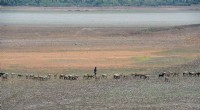
* Increased precipitation in some areas and decreased precipitation in others. Climate change is expected to lead to changes in precipitation patterns, with some areas experiencing increased precipitation and others experiencing decreased precipitation. This could lead to flooding in some areas and droughts in others.
* More extreme weather events. Climate change is expected to lead to more extreme weather events, such as hurricanes, floods, and droughts. These events can damage water infrastructure, contaminate water sources, and disrupt water distribution systems.
* Rising sea levels. Rising sea levels can contaminate freshwater sources, salinize groundwater, and inundate coastal areas.
* Changes in snowpack. Changes in snowpack can affect water availability for drinking, irrigation, and hydroelectric power generation.
* Changes in water quality. Climate change can affect water quality by altering the temperature, pH, and dissolved oxygen content of water. This can make water unsafe for drinking, swimming, and fishing.
These are just some of the potential impacts of climate change on water resources. The specific impacts that are experienced in a particular region will depend on the local climate and geography.
Here are some specific examples of how climate change has already impacted water resources around the world:
* In the United States, the Midwest has experienced increased precipitation in recent years, leading to flooding and damage to infrastructure.
* In California, the state has experienced a severe drought in recent years, which has led to water shortages and restrictions.
* In the Arctic, the sea ice is melting at an accelerated rate, which is causing sea levels to rise and threatening coastal communities.
These are just a few examples of the ways that climate change is already affecting water resources around the world. It is important to take steps to mitigate these impacts and adapt to the changes that are already occurring.