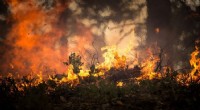
1. Increased Fuel Load: Invasive weeds often grow densely, creating a high fuel load that contributes to the intensity and spread of wildfires. These weeds can accumulate large amounts of dry biomass, which becomes highly flammable and acts as a fuel source during wildfires.
2. Ladder Fuels: Invasive weeds can create ladder fuels, enabling the fire to climb from ground vegetation to tree canopies. This process, known as "laddering," allows wildfires to spread rapidly and reach dangerous heights.
3. Altered Fire Behavior: Invasive weeds can change the microclimate and fire behavior within the ecosystem. They may release volatile oils or chemicals that influence the burning characteristics of the vegetation. This can lead to more intense and erratic fire behavior, making it harder for firefighters to control the spread.
4. Water Stress: Some invasive weeds are known to be highly competitive for water resources. This competition can stress native plants and make them more susceptible to drought conditions, which in turn increases the risk of wildfires.
5. Loss of Native Species: Invasive weeds can outcompete native plants and reduce biodiversity. The loss of native vegetation can disrupt the ecosystem's natural fire resistance mechanisms and alter the frequency and intensity of wildfires.
6. Altered Soil Conditions: Invasive weeds can alter soil structure and nutrient composition. These changes can affect the growth of native vegetation and influence the occurrence and severity of wildfires.
7. Reduced Access for Firefighters: Dense stands of invasive weeds can obstruct access routes and hamper the ability of firefighters to reach and contain wildfires. This hindrance can lead to delays in fire suppression efforts, exacerbating the spread and intensity of wildfires.
Examples:
- Cheatgrass (Bromus tectorum): Cheatgrass is a non-native annual grass that has invaded many western regions of North America. It produces a high fuel load and dries out quickly, making it a major contributor to wildfires. The presence of cheatgrass has led to increased fire frequency and larger, more intense wildfires in ecosystems like the Great Basin and the Intermountain West.
- Tamarisk (Tamarix spp.): Tamarisk is an invasive tree species found along rivers and riparian areas in the southwestern United States. It is highly flammable and burns intensely, releasing large amounts of heat. Tamarisk infestations can contribute to the severity of wildfires and threaten nearby communities and ecosystems.
- Japanese Stiltgrass (Microstegium vimineum): Japanese stiltgrass is an invasive grass that spreads rapidly in forests and woodlands. Its high fuel load and ability to dry quickly make it a fire hazard, increasing the risk of wildfires in affected areas.
Managing invasive weeds is crucial for mitigating the risk of hotter and more frequent wildfires. This includes implementing control measures to prevent the spread of invasive species, promoting native vegetation restoration, and using integrated land management practices that enhance ecosystem resilience to fire.