Here are some ways that the Coriolis effect affects vortices in nature:
1. Hurricanes and tropical cyclones: The Coriolis effect is responsible for the rotation of hurricanes and tropical cyclones. The winds in these storms rotate counterclockwise in the Northern Hemisphere and clockwise in the Southern Hemisphere. The Coriolis effect also causes these storms to move in a curved path.
2. Tornadoes: The Coriolis effect also affects tornadoes. Tornadoes typically rotate counterclockwise in the Northern Hemisphere and clockwise in the Southern Hemisphere. However, the Coriolis effect is not the only factor that determines the direction of tornado rotation.
3. Ocean currents: The Coriolis effect also affects ocean currents. The Coriolis effect deflects ocean currents to the right in the Northern Hemisphere and to the left in the Southern Hemisphere. This deflection is responsible for the large-scale circulation patterns of the ocean.
4. Weather fronts: The Coriolis effect also affects the movement of weather fronts. Weather fronts are boundaries between different air masses. The Coriolis effect causes weather fronts to move in a curved path.
The Coriolis effect is a significant force that affects the movement of objects on the Earth's surface. It is responsible for the rotation of hurricanes and tropical cyclones, the movement of ocean currents, and the movement of weather fronts.
Here is a more detailed explanation of how the Coriolis effect works:
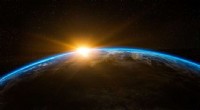
The Earth rotates on its axis from west to east. This rotation causes objects on the Earth's surface to move in a circular path. The objects that are closer to the equator move faster than the objects that are closer to the poles. This is because the Earth's surface is larger at the equator than it is at the poles.
The Coriolis effect is an inertial force that is caused by the Earth's rotation. It is directed perpendicular to the direction of motion of an object. The Coriolis effect deflects objects to the right in the Northern Hemisphere and to the left in the Southern Hemisphere.
The Coriolis effect is most noticeable for objects that are moving over long distances. For example, the Coriolis effect is responsible for the rotation of hurricanes and tropical cyclones. The winds in these storms rotate counterclockwise in the Northern Hemisphere and clockwise in the Southern Hemisphere. The Coriolis effect also causes these storms to move in a curved path.
The Coriolis effect is a significant force that affects the movement of objects on the Earth's surface. It is responsible for the rotation of hurricanes and tropical cyclones, the movement of ocean currents, and the movement of weather fronts.