Arctic Amplification:
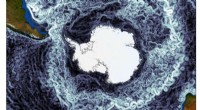
The Arctic region is warming at a faster rate compared to the rest of the planet, a phenomenon known as Arctic amplification. As the Arctic warms, it causes changes in atmospheric circulation patterns, including a weakening of the polar vortex, a large-scale low-pressure system that usually confines cold air to the polar regions. A weakened polar vortex can allow cold air to escape and spill over into lower latitudes, leading to cold spells.
Rossby Waves:
Atmospheric circulation patterns are influenced by large-scale waves in the jet stream, known as Rossby waves. Changes in the amplitude and propagation of Rossby waves can alter the jet stream's trajectory, causing it to buckle and dip southward. This southward shift of the jet stream can bring cold air masses from higher latitudes to lower latitudes, resulting in cold spells.
Snow and Ice Feedback:
Snow and ice have high albedo, meaning they reflect a significant portion of the incoming solar radiation back into space. When snow and ice melt due to warmer temperatures, they expose darker surfaces such as soil or water, which absorb more solar radiation. This leads to increased surface warming, which in turn can cause changes in atmospheric circulation and the frequency of cold spells.
Natural Climate Variability:
Climate naturally exhibits variability on various timescales, and cold spells can occur as part of this natural variability. Factors such as changes in ocean currents, volcanic eruptions, or solar activity can influence atmospheric circulation and contribute to short-term fluctuations in temperature, including periods of colder weather.
It is important to note that while cold spells may occur in a warming world, the overall trend is toward increasing global temperatures. These occasional cold periods do not negate the long-term warming trend caused by human-induced climate change. Scientists use long-term temperature records, climate models, and statistical analyses to understand the underlying causes of temperature changes and distinguish natural variability from human-induced climate change signals.