Introduction:
Climate change poses a significant threat to global agriculture, affecting food production, food security, and the livelihoods of millions of people. Accurate and timely information is crucial for developing effective adaptation strategies and ensuring the resilience of agricultural systems. This article explores advancements in research and technologies that enhance our understanding of climate change impacts on agriculture, enabling farmers and policymakers to make informed decisions.
1. Climate Modeling and Forecasting
Advancements in climate modeling have improved the accuracy of long-term weather forecasts and projections of future climate scenarios. These models incorporate data on greenhouse gas emissions, land-use changes, and other factors to simulate climate patterns at local and regional levels. By providing detailed predictions of temperature, precipitation changes, and extreme weather events, farmers can plan accordingly and adjust their farming practices to minimize risks.
2. Remote Sensing and Satellite Technologies:
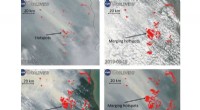
Remote sensing technologies, including satellites and drones, provide valuable information on crop health, soil moisture, and land use changes. These technologies collect multi-spectral images, enabling experts to monitor vegetation growth, detect water stress, and identify areas vulnerable to climate-induced hazards such as droughts, floods, or pest infestations. Timely access to this information helps farmers make informed decisions on irrigation, pest management, and crop rotation.
3. Precision Agriculture:
Precision agriculture utilizes various sensors, data analytics, and automation technologies to optimize crop production while minimizing resource inputs. By collecting real-time data on soil conditions, water requirements, and crop health, farmers can apply inputs such as water and fertilizers more efficiently, reducing waste and environmental impact. This approach helps farmers adapt to changing climate conditions and increase productivity.
4. Crop Modeling and Simulation:
Crop models simulate crop growth, development, and yield in response to environmental factors. These models integrate data on soil type, weather conditions, crop genetics, and management practices, allowing scientists to predict crop performance under different climate scenarios. Crop modeling helps identify suitable crops and varieties for specific regions, considering future climate projections.
5. Agro-Climate Services and Early Warning Systems:
Agro-climate services provide farmers with tailored weather forecasts, advisories, and early warnings about potential climate risks. These services leverage artificial intelligence, data analytics, and mobile technologies to deliver timely and localized information to farmers. Early warning systems help farmers take proactive measures, such as adjusting planting dates, selecting drought-resistant crops, or implementing water conservation strategies.
6. Field Experiments and Participatory Research:
Field experiments and participatory research involve farmers in the development and evaluation of climate-resilient agricultural practices. On-farm trials assess the effectiveness of different crop varieties, irrigation methods, soil management techniques, and adaptation strategies under real-world conditions. This collaborative approach ensures that research outcomes are practical, relevant, and responsive to farmers' needs and challenges.
7. Big Data Analytics and Machine Learning:
Big data analytics and machine learning algorithms enable researchers to process vast amounts of data from various sources, such as weather stations, satellite imagery, and soil sensors. These technologies identify patterns, correlations, and trends, allowing for more accurate predictions of climate impacts and the development of tailored adaptation strategies for specific regions and farming systems.
Conclusion:
Advancements in research and technologies are significantly improving our understanding of climate change threats to agriculture. Climate modeling, remote sensing, and precision agriculture provide valuable insights into changing weather patterns, crop performance, and risks associated with extreme events. Agro-climate services, participatory research, and data analytics contribute to the development of localized adaptation strategies. By harnessing these advancements, farmers, policymakers, and researchers can work together to build resilient agricultural systems that can withstand the challenges of a changing climate and ensure global food security.