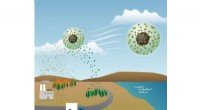
1. Limits of Life: Stratospheric life challenges the traditional understanding of the limits of life on Earth. Despite the harsh conditions in the stratosphere, which include low pressure, extreme temperatures, and high levels of ultraviolet (UV) radiation, certain microorganisms have adapted and survived in this environment. This suggests that life may be capable of existing in a wider range of conditions than previously thought.
2. Survival Beyond Earth: The existence of stratospheric life indicates that certain extremophiles have evolved strategies to withstand extreme environments. These adaptations, such as UV resistance and the ability to thrive in low-pressure conditions, could be similar to the adaptations required for life to survive on other planets or moons with harsh conditions.
3. Implications for Mars Exploration: Mars, in particular, has received considerable attention in the search for extraterrestrial life. The planet's thin atmosphere and exposure to high levels of radiation make it an extremely challenging environment for life. The discovery of stratospheric life on Earth provides hope that microbial life could potentially survive on Mars, particularly in sheltered environments such as subsurface habitats or protected niches.
4. Potential Biosignatures: The study of stratospheric life also helps scientists refine their understanding of potential biosignatures—indicators of the presence of life—that could be detectable on other planets. The unique adaptations and characteristics of microorganisms that thrive in extreme conditions can inform the design of future missions and instruments aimed at detecting signs of life beyond Earth.
5. Habitable Zones: The concept of habitable zones around stars, where conditions may be suitable for liquid water and potentially life, has been influenced by the discovery of stratospheric life. The realization that life can survive in extreme environments expands the potential range of habitable zones, increasing the likelihood of finding habitable planets or moons in the universe.
6. Adaptability of Life: Stratospheric life highlights the extraordinary adaptability and resilience of certain organisms. This adaptability suggests that life might not be confined to Earth-like environments but could potentially thrive in a variety of extreme and diverse conditions across the universe.
In conclusion, the study of stratospheric life provides valuable insights into the potential habitability of extreme environments on other worlds. It challenges our assumptions about the limits of life and broadens our perspective on the diversity and adaptability of microorganisms. As we continue to explore the universe, the lessons learned from stratospheric life play a critical role in guiding our search for extraterrestrial life and expanding our understanding of the potential for life beyond Earth.