The study, published in the journal Nature Climate Change, is the first to quantify how much climate change affects the risk of armed conflict at the global scale. It found that, on average, climate change is projected to increase the risk of armed conflict by 13% by 2050 and by 26% by the end of the century.
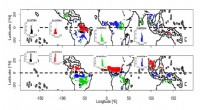
However, the study also found that the risk of armed conflict is not evenly distributed across the world. Some regions are projected to experience a much higher risk of conflict than others. For example, sub-Saharan Africa is projected to see a ten-fold increase in the risk of armed conflict by 2050, while South Asia is projected to see a five-fold increase in risk.
The study also found that the risk of armed conflict is not simply a function of temperature increase. Other factors, such as changes in precipitation, drought, and sea level rise, can also contribute to the risk of conflict.
The study's authors say that their findings have important implications for policy-makers. They say that climate change needs to be considered as a major factor in conflict prevention and peacebuilding efforts.
"Climate change is a serious threat to global peace and security," said lead author Dr. Anders Levermann, a researcher at the Potsdam Institute for Climate Impact Research. "Our study shows that climate change is already increasing the risk of armed conflict, and that the risk is projected to increase significantly in the coming decades. Policy-makers need to take this into account when developing their strategies for conflict prevention and peacebuilding."
The study's findings are based on a statistical analysis of data on armed conflict and climate change from 1950 to 2010. The researchers used a variety of statistical models to estimate the relationship between climate change and armed conflict.
The study's authors say that their findings are robust to a variety of different assumptions and model specifications. They also say that their findings are consistent with other studies that have found a link between climate change and armed conflict.