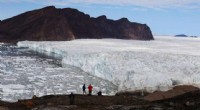
Wolverines are a cold-adapted species that rely on snow and ice for survival. They use snow to build dens for reproduction and rearing young, and they rely on ice to travel and hunt for food. As the Arctic climate warms, snow and ice are becoming less reliable, which is having a negative impact on wolverine populations.
For example, a study in Canada found that wolverine denning success declined by 50% between 1985 and 2012. This decline was linked to a decrease in snow depth and an increase in temperatures during the denning season.
Another study in Alaska found that wolverine numbers declined by 20% between 1992 and 2019. This decline was linked to a loss of sea ice, which wolverines use to travel and hunt for seals.
Climate change is also making wolverines more vulnerable to predation and competition from other species. For example, as the Arctic warms, wolves, coyotes, and bears are able to move into new areas, which can increase the risk of predation for wolverines.
Overall, climate change is having a negative impact on wolverine populations and is a major threat to their survival.