1. Carbon Release:
- Rainforest ecosystems store vast amounts of carbon in their vegetation and soil. As rainforests dry out due to climate change, drought, or human activities, the trees and plants undergo stress and release stored carbon. This carbon is released into the atmosphere as carbon dioxide (CO2), contributing to the overall increase in greenhouse gases and exacerbating global warming.
2. Forest Die-Off:
- Prolonged drought conditions can cause widespread tree mortality in rainforests. As trees die, they release the carbon they have stored, further contributing to atmospheric carbon levels. The loss of trees also reduces the forest's capacity to absorb CO2, creating a positive feedback loop that accelerates climate change.
3. Soil Carbon Decomposition:
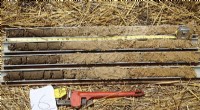
- Rainforests have high levels of organic matter in the soil, which is a significant carbon sink. As the climate becomes drier, the soil becomes warmer and drier, leading to increased microbial activity. This increased decomposition releases CO2 into the atmosphere, reducing the soil's carbon storage capacity.
4. Peatland Emissions:
- Some rainforests contain peatlands, which are waterlogged areas with high organic matter content. When peatlands dry out, the organic matter decomposes, releasing methane (CH4), a potent greenhouse gas with a much higher warming potential than CO2.
5. Altered Water Cycles:
- Changes in rainfall patterns associated with rainforest drying can disrupt the region's water cycle. Reduced rainfall leads to lower river flows and less groundwater recharge, affecting hydroelectric power generation, agriculture, and human livelihoods. Altered water cycles can also impact carbon cycling by affecting plant growth and decomposition rates.
6. Feedback Mechanisms:
- The drying out of rainforests can initiate feedback mechanisms that amplify climate change. For example, reduced rainfall leads to less cloud cover, which increases solar radiation reaching the Earth's surface and further intensifies warming. Additionally, the release of CO2 and CH4 from dying forests and peatlands contributes to the greenhouse effect, perpetuating the cycle of drying and carbon release.
7. Tipping Points:
- Scientists are concerned about the potential for rainforests to reach tipping points, beyond which their ability to recover is severely compromised. If the forest loss and drying exceed a certain threshold, the rainforest ecosystem may transition to a different state, such as a savannah or grassland, with significantly reduced carbon storage capacity.
8. Mitigation Strategies:
- To address the impacts of rainforest drying on carbon stores, various mitigation strategies are being explored, such as:
- Reducing deforestation and forest degradation
- Implementing sustainable forest management practices
- Promoting reforestation and afforestation efforts
- Enhancing carbon sequestration through conservation and restoration
- Developing alternative livelihoods for forest-dependent communities
Understanding and predicting the impacts of rainforest drying on carbon stores is a critical area of research, as it has profound implications for global climate change mitigation and sustainable land management. By studying these processes, scientists aim to inform policy and conservation efforts to protect rainforests and their vital role in regulating Earth's climate.