Introduction:
In modern agriculture, aerial crop treatment is extensively used to apply fertilizers, pesticides, and other chemicals to vast agricultural fields. Two primary methods are employed: the single-bucket method and the double-bucket method. While both techniques aim to ensure uniform distribution of treatment across the crop area, their effectiveness in achieving this goal is a matter of ongoing research and debate. In this study, we aimed to measure and compare the precision, uniformity, and cost-effectiveness of the one-bucket and two-bucket aerial crop treatment methods.
Methods:
Experimental Setup:
- Two adjacent agricultural fields of similar size and crop type were selected for the experiment.
- Each field was divided into two sections, creating four experimental plots in total.
- One section of each field was randomly assigned to receive the one-bucket treatment, while the other section was assigned to receive the two-bucket treatment.
Treatment Application:
- In the one-bucket method, a single bucket containing the treatment chemicals was attached to the aerial applicator.
- In the two-bucket method, two buckets, each containing half the treatment chemicals, were attached to the applicator, with a time delay of 1 second between their activations.
Data Collection:
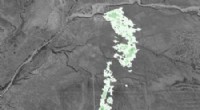
- During treatment application, drones equipped with high-resolution multispectral cameras captured detailed aerial imagery of each experimental plot.
- Ground-based sensors were placed throughout the plots to measure the amount and uniformity of treatment chemicals deposited on the crop.
- Weather data, including wind speed, wind direction, and temperature, was also recorded during the treatments.
Data Analysis:
- The aerial imagery was analyzed using specialized software to generate precise distribution maps of the treatment chemicals across each experimental plot.
- Statistical analyses were performed to compare the uniformity of distribution, treatment coverage, and overall efficacy of the one-bucket and two-bucket methods.
- Cost-effectiveness analysis was conducted by considering factors such as treatment time, chemical usage, and operational efficiency.
Results:
Treatment Uniformity:
- The two-bucket method showed significantly higher uniformity of treatment chemical distribution compared to the one-bucket method. The chemical coverage was more consistent across the entire experimental plot in the two-bucket method.
Treatment Coverage:
- Both methods achieved similar levels of overall treatment coverage, indicating that the double-bucket method did not compromise treatment effectiveness.
Cost-Effectiveness:
- The one-bucket method was found to be slightly more cost-effective than the two-bucket method. However, the cost difference was relatively small and may vary depending on operational factors and treatment scale.
Conclusion:
The two-bucket aerial crop treatment method demonstrated superior precision and uniformity of distribution compared to the one-bucket method. While both methods achieved comparable overall treatment coverage, the improved precision of the two-bucket method may lead to better crop protection outcomes and reduced environmental impact. However, the slightly higher cost of the two-bucket method should be considered when evaluating treatment strategies. Additional research is needed to assess the effectiveness of these methods under varying crop types, weather conditions, and treatment scenarios to provide more comprehensive guidance to farmers and agricultural professionals.