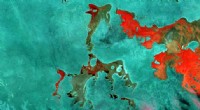
Across the Caribbean, a unique challenge has emerged in the form of an 'exploding seaweed problem'. Sargassum, a brown algae, has increasingly accumulated in massive rafts, covering coastlines and creating substantial ecological and socio-economic impacts. Governments and researchers are turning their attention to harnessing this abundant biomass to address several significant issues, including food, fertilizer, fuel, and the conservation of marine ecosystems.
1. Food for People and Livestock:
The excessive growth of Sargassum has led to several explorations of its potential as a food source. Scientists are investigating ways to process the seaweed into edible products for human consumption. Additionally, the high protein content of Sargassum makes it a prospective nutritious supplement for livestock feed, reducing reliance on imported animal feeds and potentially enhancing the efficiency of local agriculture.
2. Fertilizer for Sustainable Farming:
Sargassum's abundant nutrients, such as nitrogen, phosphorus, and potassium, make it an attractive option as a natural fertilizer. Agricultural research focuses on developing methods to convert the seaweed into compost or extract valuable nutrients for use in organic farming. This approach not only reduces the need for synthetic fertilizers but also improves soil health and promotes environmentally sustainable agriculture.
3. Biofuel Production for Renewable Energy:
The potential of Sargassum as a source of biofuel is garnering substantial attention. The algae's high energy density and renewable nature make it a viable alternative to fossil fuels. Researchers are experimenting with various technologies, including anaerobic digestion and pyrolysis, to convert Sargassum into biogas, bio-oil, or ethanol. Successful advancements in this field could reduce the Caribbean's dependence on imported petroleum and contribute to the region's transition to sustainable energy sources.
4. Conservation of Marine Ecosystems:
Excessive Sargassum accumulations pose significant threats to marine life and ecosystems. The seaweed's rapid growth can block sunlight from reaching underwater seagrass beds, leading to the decline of vital habitats for fish and other aquatic species. Moreover, the decomposition of Sargassum can cause oxygen depletion in the water, resulting in fish kills. By harvesting and redirecting Sargassum for various uses, the ecological balance can be restored, and the biodiversity of marine ecosystems can be protected.
5. Economic Opportunities and Job Creation:
The management of the Caribbean's exploding seaweed problem presents opportunities for economic development. The establishment of industries focused on processing Sargassum for food, fertilizer, or fuel can generate jobs, bolster local economies, and reduce reliance on imported products. Additionally, tourism-dependent regions can benefit from cleaner beaches and improved water quality, drawing visitors seeking pristine coastal environments.
Conclusion:
The Caribbean's exploding seaweed problem has evolved from an ecological challenge to a potential source of solutions for food, fertilizer, fuel, and conservation. Through scientific research and collaborative efforts, the region can harness the abundance of Sargassum to foster sustainable agriculture, generate renewable energy, and safeguard marine ecosystems. By transforming this biomass into valuable resources, the Caribbean can unlock economic opportunities, enhance food security, and preserve the ecological balance of its precious coastal environments for future generations.