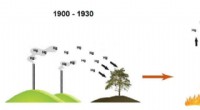
Forest fragmentation is a process that divides large, continuous forests into smaller and isolated patches. This can have a number of negative effects on birds, including:
* Reduced habitat availability: Forest fragmentation reduces the amount of habitat available for birds, which can lead to competition for resources and population declines.
* Increased edge effects: Forest edges are more exposed to wind and sunlight, which can create a harsh environment for birds. This can lead to increased nest predation and reduced nest success.
* Increased nest predation: Forest fragmentation can make it easier for predators to find and access bird nests. This can lead to increased nest predation and reduced nest success.
* Altered species composition: Forest fragmentation can lead to changes in the species composition of bird communities. Some species, such as those that require large areas of forest for nesting or foraging, may decline or disappear from fragmented forests. Other species, such as those that are more tolerant of edge habitats, may increase in abundance.
The effects of forest fragmentation on birds can vary depending on a number of factors, including the size and shape of the forest fragments, the amount of edge habitat, and the species of birds present.
Wing shape and forest fragmentation
One factor that can influence how forest fragmentation affects birds is their wing shape. Birds with long, pointed wings are typically more擅长长途飞行的,而那些有大圆翼的鸟类更加擅长滑翔和机动。
The shape of a bird's wings can affect how it responds to forest fragmentation in several ways. First, birds with long, pointed wings are typically more able to fly long distances between forest fragments. This means that they may be less affected by forest fragmentation than birds with large, round wings. Second, birds with long, pointed wings are typically more able to maneuver through dense vegetation. This means that they may be more successful at finding food and avoiding predators in fragmented forests than birds with large, round wings.
Finally, birds with long, pointed wings are typically more able to escape from predators. This means that they may be less likely to be killed by predators in fragmented forests than birds with large, round wings.
Conclusion
The shape of a bird's wings can influence how it responds to forest fragmentation. Birds with long, pointed wings are typically more successful in fragmented forests than birds with large, round wings. This is because birds with long, pointed wings are more able to fly long distances, maneuver through dense vegetation, and escape from predators.