The study, published in Nature Communications, shows how global warming affects methane dynamics in Arctic lakes and demonstrates the important role of plant waxes in regulating methane emissions.
Methane is a potent greenhouse gas, contributing significantly to global warming. Wetlands and lakes in the Arctic are important sources of atmospheric methane, and as the Arctic warms, these sources are expected to increase.
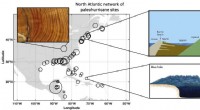
The research team collected sediment cores from three lakes in the Canadian Arctic and analysed the plant waxes preserved in the sediments. Plant waxes are produced by plants and are resistant to degradation, making them ideal for studying past environmental conditions.
The team found that the concentration of plant waxes in the sediments increased during warm periods and decreased during cold periods. This suggests that plant growth and the production of plant waxes are enhanced by warmer temperatures.
The team also found that the isotopic composition of the plant waxes changed during warm and cold periods. Isotopes are different forms of an element that have the same number of protons but different numbers of neutrons. The isotopic composition of plant waxes can be used to infer past changes in temperature and precipitation.
Combining these lines of evidence, the researchers were able to reconstruct past changes in temperature, precipitation, and methane emissions from Arctic lakes. The team found that warmer temperatures and increased precipitation led to increased plant growth and production of plant waxes. This, in turn, stimulated methane production and emission from Arctic lakes.
The findings of this study have important implications for understanding the role of Arctic lakes in the global carbon cycle and for predicting how these systems will respond to future climate change.