1. Evapotranspiration: Trees release water vapor into the atmosphere through the process of transpiration. As water evaporates from the leaves of trees, it rises and contributes to the overall moisture content of the air. This increased moisture content can lead to cloud formation.
2. Aerosol Emissions: Trees emit aerosols, which are tiny particles suspended in the atmosphere. These aerosols act as cloud condensation nuclei, providing surfaces on which water vapor can condense and form clouds. The types and concentrations of aerosols emitted by trees can influence cloud formation and cloud properties.
3. Surface Roughness: The presence of trees creates surface roughness on the Earth's surface. This roughness alters the airflow patterns, leading to the formation of eddies and updrafts. These updrafts can transport moisture and aerosols higher into the atmosphere, contributing to cloud formation.
4. Microclimates: Trees can create microclimates within and around their canopies. These microclimates often have higher humidity and lower temperatures compared to the surrounding areas. These conditions are favorable for cloud formation and can influence cloud patterns.
5. Changes in Land Surface Properties: Trees can alter land surface properties such as albedo (reflectivity) and thermal emissivity. These changes in land surface properties can affect the amount of solar radiation absorbed and emitted by the Earth's surface, impacting the atmospheric conditions and cloud formation.
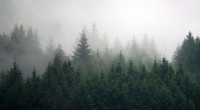
6. Interaction with Atmospheric Circulation: The presence of trees can influence atmospheric circulation patterns on both local and regional scales. For example, large forests can generate their own weather systems and affect cloud formation downwind of the forest.
Overall, trees influence cloud formation through their ability to release water vapor, emit aerosols, modify surface roughness, create microclimates, alter land surface properties, and interact with atmospheric circulation patterns. Understanding these interactions is important in studying weather and climate processes, as well as predicting cloud behavior and precipitation patterns in forested regions.