According to the research, the Sahara's greening was primarily driven by changes in the Earth's orbit and tilt, which led to increased rainfall in the region. Specifically, the precession of the Earth's axis and changes in the tilt of its rotational axis caused the summer monsoon winds to shift northward, bringing moisture from the Atlantic Ocean deep into the Sahara.
During these periods of greening, the Sahara was characterized by grasslands, savannas, and even lakes, supporting diverse flora and fauna. This wetter environment allowed for the development of human settlements and civilizations, such as the ancient Egyptian civilization along the Nile River and various Neolithic cultures across the region.
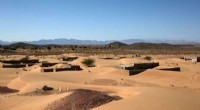
However, around 5,000 years ago, the Earth's orbital and axial changes reversed, causing the summer monsoon winds to weaken and shift southward again. This resulted in a significant decrease in rainfall and the gradual drying out of the Sahara. Over time, the desert expanded, burying the once-lush grasslands and savannas under layers of sand.
The research highlights the interconnectedness of Earth's systems and the influence of astronomical factors on climate patterns. It also provides insights into the potential impacts of future climate changes on the Sahara and other arid regions, helping scientists and policymakers better understand and plan for the long-term effects of global warming.