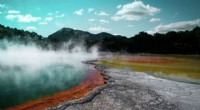
Soda lakes are shallow, ephemeral bodies of water that are characterized by high concentrations of dissolved salts, including sodium carbonate, sodium bicarbonate, and sodium sulfate. These lakes are often found in arid and semi-arid regions, where they receive little rainfall and the evaporation rate is high.
Soda lakes are extreme environments, but they are also home to a diverse array of microorganisms, including bacteria, archaea, and algae. These microorganisms have adapted to the harsh conditions of soda lakes, and they play an important role in the lake's ecosystem.
One of the most important roles that microorganisms play in soda lakes is the production of organic matter. Organic matter is the building block of life, and it is essential for the growth of plants and animals. Microorganisms in soda lakes produce organic matter through a process called photosynthesis, which uses sunlight to convert carbon dioxide and water into glucose and oxygen.
The organic matter produced by microorganisms in soda lakes is used as food by other organisms in the lake, including invertebrates, fish, and birds. These organisms in turn provide food for larger predators, such as coyotes and bears.
Soda lakes are also important for the cycling of nutrients, such as nitrogen and phosphorus. Nitrogen and phosphorus are essential for the growth of plants, and they are often limited in arid and semi-arid regions. Microorganisms in soda lakes play an important role in the cycling of these nutrients, making them available to plants and other organisms.
Soda lakes are a fascinating and extreme environment, but they are also home to a diverse array of microorganisms that play an important role in the lake's ecosystem. These lakes may also have been important sites for the origin of life on Earth, and they could be used as a model for studying the conditions that led to the emergence of life.
Evidence supporting the hypothesis that soda lakes could have been cradles of life on Earth:
- The high concentration of salts in soda lakes provides a protected environment for microorganisms, shielding them from the harsh conditions of the outside world.
- Soda lakes contain a variety of organic molecules, which are the building blocks of life.
- Microorganisms in soda lakes have been found to produce methane and other gases that are essential for life.
- Soda lakes are found on Mars and other planets, suggesting that they could have been sites for the origin of life elsewhere in the universe.
Conclusion
Soda lakes are a promising environment for the origin of life on Earth. They provide a protected environment for microorganisms, contain a variety of organic molecules, and have been found to produce methane and other gases that are essential for life. Further research on soda lakes could help to shed light on the conditions that led to the emergence of life on Earth.