Location: Coastal region of India
Date: 4,500-5,000 years ago
Key Findings:
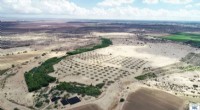
- A team of scientists from India and the United States conducted excavations at an ancient village in the coastal region of India, revealing evidence of adaptation to drought and rising sea levels dating back approximately 4,500-5,000 years.
- The village was part of the Indus Valley Civilization, one of the earliest urban civilizations in the world. The findings provide new insights into the resilience of ancient societies in response to environmental challenges.
- Excavations yielded remains of houses, wells, canals, and an extensive water management system, indicating that the inhabitants had developed various strategies to cope with the challenges of drought and limited access to freshwater.
- The presence of water storage facilities and the construction of elevated platforms for houses suggest that the villagers were aware of the risk of flooding and took measures to mitigate its impact.
- Archaeologists also discovered the remains of crops such as wheat, barley, and rice, indicating the adoption of agricultural practices suitable for the prevailing climatic conditions.
- The findings suggest that the ancient village's inhabitants had developed a sustainable way of life that allowed them to adapt and thrive in a challenging environment characterized by drought and rising sea levels.
Significance:
The study highlights the resilience and adaptability of ancient societies in the face of environmental challenges. The knowledge gained from this research offers valuable lessons for contemporary societies seeking to address similar issues related to climate change and water resource management.