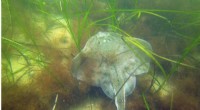
1. Bioluminescence: Many deep-sea comb jellies possess bioluminescent organs called ctenophores. These organs produce light through chemical reactions, and comb jellies use them to communicate, attract prey, and camouflage themselves. Bioluminescence helps them survive in the dark depths where sunlight does not penetrate.
2. Gelatinous Body: Comb jellies have a gelatinous body composed primarily of water, which gives them buoyancy and helps them withstand the high pressure in the deep sea. Their bodies are also flexible and can withstand the compression associated with deep-sea conditions.
3. Reduced Metabolism: Deep-sea comb jellies have a reduced metabolic rate compared to their shallow-water counterparts. This adaptation allows them to survive in environments with limited food resources. They can conserve energy by slowing down their bodily processes and relying on stored energy reserves.
4. Slow Movement: Comb jellies move slowly and efficiently, reducing energy expenditure. They use their comb-like rows of cilia to generate gentle water currents that propel them through the water. This slow and steady movement helps them conserve energy and navigate the deep sea's viscous environment.
5. Efficient Feeding: Deep-sea comb jellies have evolved efficient feeding mechanisms to cope with the scarcity of food in their environment. They use their tentacles and specialized structures called colloblasts to capture and digest prey. Some comb jellies are also known to be suspension feeders, capturing particles from the water column.
6. Enhanced Senses: Deep-sea comb jellies possess enhanced sensory systems that enable them to detect and respond to their environment. They have sensitive photoreceptors to perceive light in the dim deep-sea conditions. Additionally, they have mechanoreceptors and chemical sensors that help them navigate, locate prey, and avoid predators.
7. Deep-Sea Coloration: Many deep-sea comb jellies exhibit dark or transparent bodies that help them camouflage themselves in the darkness. Some species have red or orange pigmentation, which helps filter out the blue light that penetrates the deep sea, allowing them to blend into their surroundings.
These adaptations collectively enable comb jellies to thrive in the challenging conditions of the deep sea, where they play an essential role in marine ecosystems, contributing to biodiversity and ecological balance in these dark and mysterious environments.