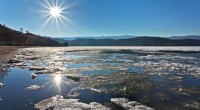
In the Arctic and sub-Arctic regions, permafrost - soil that remains frozen for at least two consecutive years - plays a crucial role in regulating the Earth's climate by storing vast amounts of organic carbon. As global temperatures rise due to climate change, the thawing of permafrost has emerged as a significant concern due to its potential to release this stored carbon into the atmosphere, contributing to further warming.
To better understand the intricate connections between permafrost thawing, vegetation dynamics, and the carbon cycle, a comprehensive field study has been initiated. This research project aims to investigate the ecological and biogeochemical consequences of permafrost degradation in these sensitive ecosystems.
At the heart of this study lies the establishment of several experimental sites across a range of permafrost landscapes, spanning from continuous to discontinuous permafrost zones. These sites encompass diverse vegetation communities, including forests, wetlands, and tundra, each representing unique ecosystems with distinct characteristics.
At each experimental site, researchers employ a combination of advanced field measurements and sophisticated analytical techniques:
- Soil temperature and moisture sensors are strategically placed to monitor the dynamics of permafrost thawing.
- Detailed vegetation surveys are conducted to assess changes in plant species composition and productivity over time.
- Soil samples are collected and analyzed to determine carbon stocks and decomposition rates.
- Greenhouses gas flux measurements, including carbon dioxide (CO2) and methane (CH4) exchanges, are performed using cutting-edge technology.
- Advanced modeling approaches are employed to integrate field data and predict future changes in vegetation, carbon storage, and greenhouse gas emissions.
By meticulously combining these methods, the study seeks to answer fundamental questions about the cascading effects of permafrost thawing on vegetation and the carbon cycle:
1. How do shifts in plant species composition and productivity influence carbon uptake and storage?
2. What are the primary factors controlling the decomposition of organic matter in thawing permafrost soils?
3. To what extent do changes in vegetation and soil conditions alter the exchange of greenhouse gases between the thawing permafrost and the atmosphere?
4. How can we predict future vegetation dynamics and carbon cycling in response to projected permafrost degradation?
The outcomes of this comprehensive field study will provide critical insights into the complex mechanisms that link permafrost thawing, vegetation alterations, and carbon cycle dynamics. This knowledge will inform policy-makers, land managers, and the scientific community about the potential consequences of climate-induced permafrost degradation and contribute to mitigating strategies for combating climate change.
By unraveling the intricate connections between permafrost, vegetation, and the carbon cycle, we strive to safeguard the Arctic's delicate ecosystems and ensure a sustainable future for our planet.