1. Temperate Forests:
- Temperate forests, found in the eastern and western regions of the US, are moderately effective at carbon sequestration. Oak-hickory forests, for instance, have a moderate carbon storage capacity and can provide habitat for diverse plant and animal species.
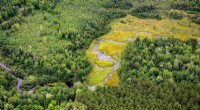
2. Boreal Forests:
- Boreal forests are located in the northernmost regions of the US, primarily in Alaska. These cold, coniferous forests have high carbon storage potential and can play a significant role in carbon sequestration.
3. Pacific Northwest Forests:
- The Pacific Northwest region, which includes Washington and Oregon, has vast areas of coniferous forests, such as Douglas fir and western hemlock. These forests are known for their high productivity and carbon storage capacity.
4. Southeastern Forests:
- Southeastern forests, comprising regions such as Georgia and Florida, consist of various tree species, including loblolly pine, slash pine, and longleaf pine. These forests have moderate carbon sequestration potential and can provide economic benefits through sustainable forest management.
5. Great Basin Forests:
- The Great Basin region, encompassing Nevada and Utah, has arid and semi-arid forests dominated by pinyon-juniper woodlands. These forests have limited carbon storage capacity due to low precipitation and water availability.
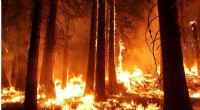
It's important to note that future carbon sequestration potential can be influenced by climate change impacts, such as rising temperatures, changes in precipitation patterns, and increased frequency of disturbances like wildfires. Sustainable forest management practices, such as reforestation, selective logging, and conservation, will be critical in enhancing the carbon sequestration capacity of US forests.