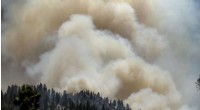
When a forest fire occurs, the intense heat causes the vegetation and organic matter on the forest floor to break down and decompose rapidly. This process releases essential nutrients, such as nitrogen, phosphorus, and potassium, back into the soil. These nutrients can then be taken up by new plants, helping them to grow and thrive.
2. Seed Germination
Some plant species require specific conditions, such as heat or smoke, in order for their seeds to germinate. Forest fires can provide these conditions, allowing these plants to establish themselves in new areas. For example, the lodgepole pine (Pinus contorta) is a tree species that is well-adapted to fire. Its cones are serotinous, meaning that they remain closed and unopened until they are exposed to high temperatures. When a forest fire occurs, the heat causes the cones to open and the seeds to be released. The seeds can then germinate and grow into new trees.
3. Disease and Pest Control
Forest fires can also help to control the spread of disease and pests. The high temperatures of a fire can kill harmful organisms, such as insects, fungi, and bacteria. This can help to protect trees and other plants from damage and disease.
4. Habitat Creation
Forest fires can create new habitats for plants and animals. The open areas created by a fire can provide a place for new plants to grow and for animals to hunt and forage. For example, some bird species, such as the black-backed woodpecker (Picoides arcticus), prefer to live in burned forests. These birds feed on insects that are attracted to the dead trees and other vegetation.
5. Biodiversity
Forest fires can also help to maintain biodiversity by encouraging the growth of different plant species. Some plant species are more tolerant of fire than others, and these species are more likely to survive a fire. This can lead to a greater diversity of plant species in a forest.
Overall, forest fires are a natural part of many forest ecosystems. They can provide a number of benefits to living things, including nutrient recycling, seed germination, disease and pest control, habitat creation, and biodiversity. However, it is important to note that forest fires can also be destructive and cause damage to property and loss of life. Therefore, it is important to manage forest fires carefully and to take steps to prevent them from becoming too large or too destructive.