However, it's important to note that Earth's appearance as a pale blue dot in this particular photograph is due to the specific conditions and perspective from which it was taken. Earth is not literally pale blue in color. Its atmosphere scatters sunlight, giving it a bluish hue when viewed from space. The "dot" aspect is a result of the immense distance from which the photograph was taken, making Earth appear as a mere speck in the grand scheme of the universe.
In reality, Earth is a beautiful and vibrant planet with a rich diversity of colors and landscapes. Its surface is covered by vast oceans, lush green forests, towering mountains, expansive deserts, and colorful coral reefs. Earth's atmosphere is indeed predominantly nitrogen and oxygen, but it also contains trace amounts of other gases that contribute to its unique composition and characteristics.
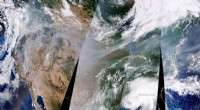
When observed from a different perspective, such as from Earth's orbit or the surface of the Moon, Earth appears as a vibrant blue planet with intricate cloud patterns and swirling oceans. The term "pale blue dot" should therefore be understood in the context of the particular photograph and as a reminder of our small place in the vastness of the universe, rather than as a literal description of Earth's color or appearance.