Lemurs are a group of primates endemic to the island of Madagascar. They exhibit great diversity in terms of their behavior and social systems. Some lemur species live in small family groups, while others form larger, more complex social networks.
The study focused on two lemur species: the black-and-white ruffed lemur (Varecia variegata) and the red-bellied lemur (Eulemur rubriventer). These species represent different ends of the social spectrum. The black-and-white ruffed lemur is a solitary species, while the red-bellied lemur lives in large groups with complex social structures.
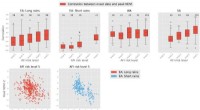
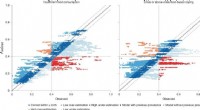
Using data collected from long-term field studies and spatial analyses, the researchers examined how the distribution and abundance of these two species were affected by forest loss and fragmentation. Their findings revealed a distinct pattern of vulnerability.
The red-bellied lemur, despite living in larger groups and having a more complex social system, showed higher resilience to forest loss and fragmentation compared to the black-and-white ruffed lemur. This surprising finding can be explained by the red-bellied lemur's flexible social behavior.
The red-bellied lemur is known to modify its social structure and behavior in response to environmental changes. When faced with habitat loss or fragmentation, these lemurs can adjust their group size, range use, and foraging strategies. This flexibility allows them to cope better with habitat degradation and maintain viable populations in fragmented landscapes.
In contrast, the black-and-white ruffed lemur is a territorial and solitary species. It relies on large, continuous forest blocks for its survival. When its habitat is fragmented, this species struggles to adapt and establish new territories. As a result, the black-and-white ruffed lemur is more susceptible to population decline and local extinction.
These findings highlight the importance of considering species-specific traits when evaluating the impact of forest loss and fragmentation on lemur populations. While larger group sizes and complex social structures may confer some resilience to environmental changes, other factors such as social flexibility and adaptability play a crucial role in determining a species' ability to persist in fragmented habitats.
Understanding the nuances of lemur social behavior and ecology is vital for developing effective conservation strategies. By identifying the most vulnerable species and understanding the mechanisms behind their sensitivity, we can better protect these unique primates and their habitats in the face of ongoing deforestation and habitat fragmentation in Madagascar.