Carbon Storage: Rainforests are known to be immense reservoirs of carbon, primarily stored in the form of biomass (trees, plants) and soil organic matter. As rainforests experience drying conditions due to climate change and other factors, there is concern about the release of this stored carbon into the atmosphere.
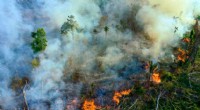
Deforestation and Degradation: Drying conditions in rainforests can exacerbate deforestation and forest degradation. Droughts, wildfires, and logging activities can lead to the loss of forest cover, resulting in the release of carbon stored in trees and soil.
Decomposition and Respiration: As rainforests dry out, the decomposition of organic matter accelerates due to increased temperatures and decreased moisture. This process releases carbon dioxide (CO2) and methane (CH4), potent greenhouse gases that contribute to global warming.
Soil Carbon Changes: Drying conditions can also affect soil carbon dynamics. Microorganisms responsible for organic matter decomposition become more active in warmer and drier environments, leading to the release of CO2 from the soil. Additionally, reduced plant growth and litterfall due to drought can further deplete soil carbon stocks.
Forest Dieback and Feedbacks: In extreme cases, severe drying can cause widespread forest dieback, resulting in the loss of vast amounts of carbon. Dieback can trigger positive feedbacks, such as reduced evapotranspiration and altered regional climate patterns, exacerbating drought conditions and further carbon release.
Hydrological Changes: Changes in rainfall patterns and the drying out of rainforests can disrupt hydrological cycles. This can affect the availability of water for plants, animals, and local communities and alter the transport of nutrients and carbon within the ecosystem.
Habitat Loss and Biodiversity: The drying out of rainforests also leads to habitat loss and biodiversity decline. Many rainforest species are highly adapted to specific environmental conditions, and changes in moisture levels can disrupt their survival and reproductive success.
Understanding these impacts is crucial for developing strategies to mitigate carbon emissions and conserve rainforest ecosystems. Scientists employ various methods, including field observations, remote sensing, modeling, and controlled experiments, to study the complex interactions between rainforest drying, carbon storage, and climate feedbacks. Their research aims to inform policy and decision-making processes for preserving these vital carbon sinks and mitigating the impacts of climate change.