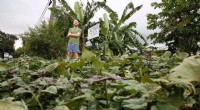
1. Evapotranspiration: Trees release water vapor into the atmosphere through the process of transpiration, where water is absorbed by the roots and released through the leaves. This water vapor contributes to the formation of clouds.
2. Aerosol Emissions: Trees emit biogenic volatile organic compounds (BVOCs) and aerosols, such as terpenes and isoprene, into the atmosphere. These compounds can act as cloud condensation nuclei (CCN) around which water vapor can condense and form clouds.
3. Surface Roughness: The presence of trees creates surface roughness on the Earth's surface. This roughness alters the airflow patterns, leading to the formation of eddies and turbulence. These disturbances can enhance vertical mixing in the atmosphere, promoting cloud formation.
4. Energy Transfer: Trees modify the energy balance at the Earth's surface by providing shade and releasing water vapor. This can affect the temperature and humidity conditions, influencing cloud formation.
5. Microclimate Effects: Trees create microclimates around them by altering temperature, humidity, and wind patterns. These microclimates can influence cloud formation on a localized scale.
6. Large-scale Atmospheric Effects: Forests can influence cloud formation and precipitation patterns on a larger scale. For example, the Amazon rainforest contributes significantly to the formation of clouds over the region and affects regional rainfall patterns.
7. Aerosol-Cloud Interactions: The aerosols emitted by trees can interact with clouds, altering their properties, such as cloud droplet size and cloud albedo (reflectivity). These changes can influence cloud lifetime and precipitation efficiency.
8. Cloud Dissipation: In some cases, trees can also lead to cloud dissipation. When trees release large amounts of water vapor into the atmosphere, it can lead to the formation of dense fog or low-level clouds. However, as these clouds move away from the forest area, they can dissipate due to reduced moisture availability.
Understanding the complex interactions between trees and cloud formation is crucial for studying weather patterns, climate change, and the hydrological cycle. It also highlights the importance of preserving forests and maintaining ecological balance for sustainable environmental conditions.