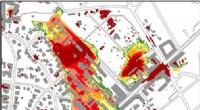
Lead researcher, Dr. Ana Maria Santos, explains, "Our initial hypothesis was that the Spix's Macaw, a species historically found in the arid scrublands of northeastern Brazil, would be severely impacted by the encroachment of urban development. However, through extensive field studies and monitoring, we observed a thriving population of Spix's Macaws within the urban landscape of the city of [City name]."
The researchers meticulously surveyed urban green spaces, parks, and even private gardens, where they documented nesting pairs, vocalizations, and foraging behavior of Spix's Macaws. Surprisingly, the urban environment seemed to offer an abundance of food sources, such as fruits and seeds from ornamental trees and gardens, as well as nesting opportunities in tall buildings and old growth trees.
Dr. Santos emphasizes, "The adaptability of the Spix's Macaw to urban conditions caught us by surprise. These birds demonstrated a remarkable ability to exploit the resources provided by the urban ecosystem while maintaining their social behaviors and breeding success."
The implications of this discovery extend beyond the immediate conservation of the Spix's Macaw. It demonstrates that certain endangered species may possess an unexpected resilience and adaptability in response to human-modified environments. This knowledge challenges traditional conservation approaches that exclusively focus on protecting pristine habitats.
As Dr. Santos explains, "Our findings suggest that incorporating urban areas into conservation strategies could provide new opportunities for the survival of endangered species. It encourages us to rethink the role of urban planning and green spaces in supporting biodiversity and fostering coexistence between humans and wildlife."
The researchers emphasize that the success of the Spix's Macaw in urban areas should not lead to complacency. Conservation efforts must continue to prioritize the protection of their natural habitats while embracing the possibilities that urban environments can offer.
This groundbreaking discovery highlights the potential for conservation innovation and demonstrates the remarkable ability of certain endangered species to adapt and thrive in unexpected circumstances. It offers a beacon of hope for the conservation of the Spix's Macaw and inspires future research into the resilience of wildlife in human-modified landscapes.