1. Sunlight Composition: Sunlight consists of a spectrum of colors, including red, orange, yellow, green, blue, indigo, and violet. Each color has its own wavelength and energy level.
2. Atmospheric Particles: The Earth's atmosphere contains tiny particles, such as dust, smoke, water vapor, and gas molecules. These particles act as scatterers of sunlight.
3. Rayleigh Scattering: When sunlight encounters these atmospheric particles, a phenomenon called Rayleigh scattering occurs. Rayleigh scattering is the preferential scattering of shorter wavelength light (blue and violet) compared to longer wavelength light (red and orange). This means that blue and violet light are scattered more effectively by the particles.
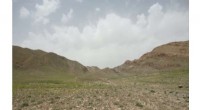
4. Path Length: The distance between the observer and the distant mountain is significant. As sunlight travels from the sun towards the mountain and then to the observer, it must traverse a greater distance through the atmosphere.
5. Scattering and Absorption: As the sunlight travels through the atmosphere, the blue and violet light is preferentially scattered by the particles, while the longer wavelengths (red, orange, and yellow) experience less scattering. Some of the scattered blue light is absorbed by other particles in the atmosphere.
6. Blue Dominance: The result of Rayleigh scattering and selective absorption is that more blue light reaches the observer's eye from the distant mountain than any other color. The other colors, including red, orange, and yellow, are scattered in different directions or absorbed, leaving the viewer with a predominantly blue perception of the mountain.
7. Color Perception: Our perception of color is a physiological phenomenon that is processed by our brain based on the relative amounts of different wavelengths of light reaching our eyes. The brain interprets the dominant blue light from the distant mountain as the color blue.
In summary, the blue appearance of distant mountains is a consequence of Rayleigh scattering, which selectively scatters shorter wavelength light (blue) more effectively than longer wavelength light (red). As sunlight travels a greater distance through the atmosphere, the blue component becomes dominant due to its higher scattering efficiency, giving distant mountains their characteristic blue hue. This phenomenon is a fascinating aspect of atmospheric optics that shapes the colors we see in our natural environment.