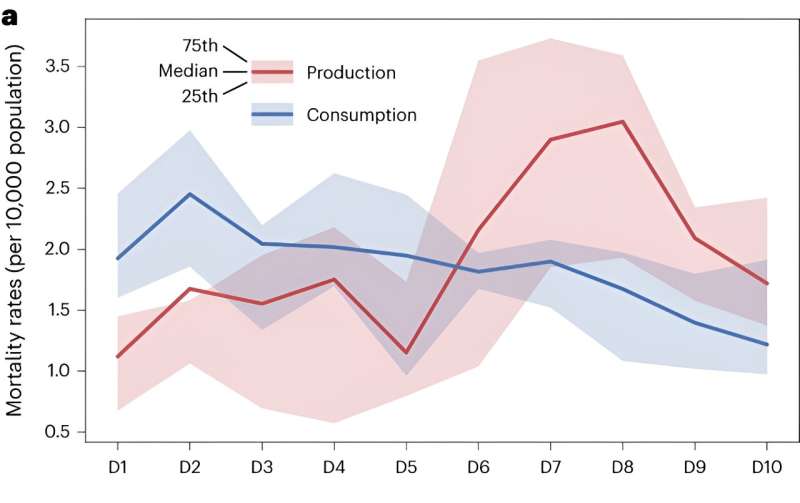
Across regions where food is produced, emissions from agriculture pose health risks to local populations. Among them, low-income groups are hit the hardest, a study published in Nature Food by researchers at Peking University (PKU) and collaborators finds.
The study underscores significant health risks and inequalities within global food systems, revealing that low-income populations are disproportionately affected. These findings are critical for addressing disparities targeted by the United Nations Sustainable Development Goals (SDGs).
Key findings:
The study utilized high-resolution emission inventories of ammonia and other pollutants, provincial-scale input-output models, and CMAQ concomitant models (computer tools that are used for air quality management) to assess health risks.
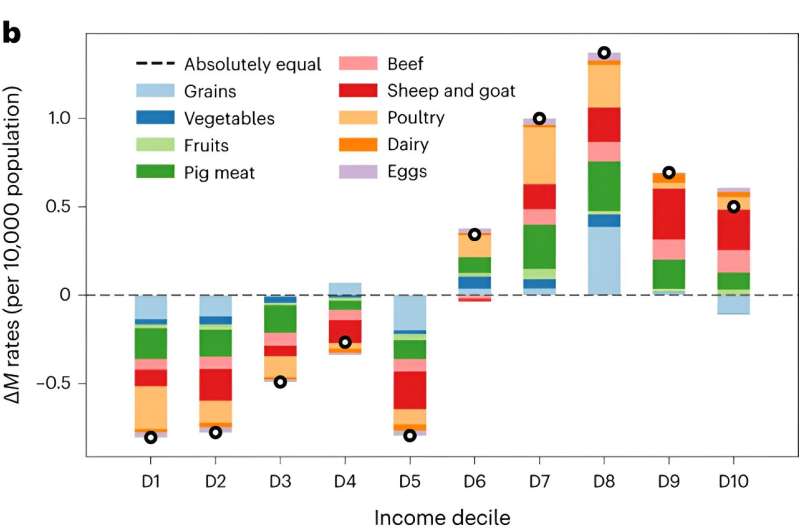
This study highlights the need for integrated interventions that address both production and consumption processes to effectively reduce health risks and inequalities. This research provides a crucial step forward in understanding and mitigating the health impacts of food systems on different income groups globally.
More information: Lianming Zheng et al, Health burden from food systems is highly unequal across income groups, Nature Food (2024). DOI: 10.1038/s43016-024-00946-7
Journal information: Nature Food
Provided by Peking University