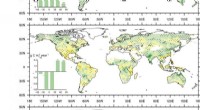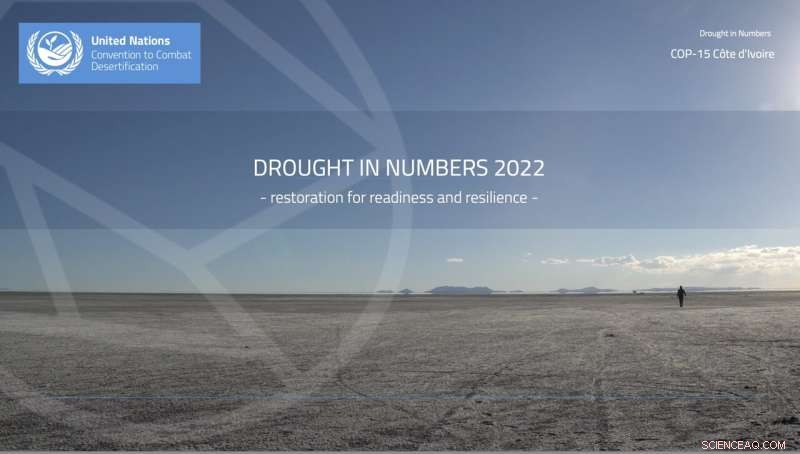
The new report, an authoritative compendium of drought-related information and data, helps inform negotiations of one of several decisions by UNCCD's 196 member states, to be issued 20 May at the conclusion of COP15. Credit: UNCCD
Humanity is "at a crossroads" when it comes to managing drought and accelerating mitigation must be done "urgently, using every tool we can," says a new report from the United Nations Convention to Combat Desertification (UNCCD).
"Drought In Numbers, 2022," released today to mark Drought Day at UNCCD's 15th Conference of Parties (COP15, 9-20 May in Abidjan, Côte d'Ivoire), calls for making a full global commitment to drought preparedness and resilience in all global regions a top priority.
The report, an authoritative compendium of drought-related information and data, helps inform negotiations of one of several decisions by UNCCD's 196 member states, to be issued 20 May at the conclusion of COP15.
"The facts and figures of this publication all point in the same direction: an upward trajectory in the duration of droughts and the severity of impacts, not only affecting human societies but also the ecological systems upon which the survival of all life depends, including that of our own species," says Ibrahim Thiaw, Executive Secretary of the UNCCD.
The report creates a compelling call to action. For example:
Unless action is stepped up:
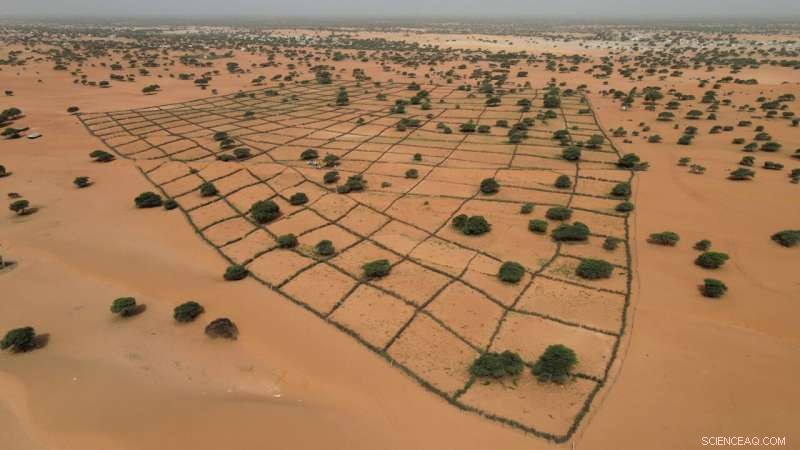
“One of the best, most comprehensive solutions (to drought) is land restoration, which addresses many of the underlying factors of degraded water cycles and the loss of soil fertility. We must build and rebuild our landscapes better, mimicking nature wherever possible and creating functional ecological systems.”Ibrahim Thiaw, Executive Secretary, UNCCD. Credit: UNCCD
"We are at a crossroads," says Thiaw. "We need to steer toward the solutions rather than continuing with destructive actions, believing that marginal change can heal systemic failure.
"One of the best, most comprehensive solutions is land restoration, which addresses many of the underlying factors of degraded water cycles and the loss of soil fertility. We must build and rebuild our landscapes better, mimicking nature wherever possible and creating functional ecological systems."
Beyond restoration, he adds, is the need for a paradigm shift from "reactive" and "crisis-based" approaches to "proactive" and "risk-based" drought management approaches involving coordination, communication and cooperation, driven by sufficient finance and political will.
Needed as well are:
The new UNCCD report notes that 128 countries have expressed willingness to achieve or exceed Land Degradation Neutrality. And nearly 70 countries participated in the UNCCD's global drought initiative, which aims to shift from reactive approaches to drought to a proactive and risk-reducing approach.
Thiaw underlined the importance of promoting public awareness about desertification and drought, and letting people know the problems can be effectively tackled "through ingenuity, commitment and solidarity."
"We all must live up to our responsibility to ensure the health of present and future generations, wholeheartedly and without delay."
The COP15 decision on drought is expected to touch on five interrelated areas: