People often confuse weather with climate, but they are not the same, though they share common components. Elements of weather and climate include measurements of wind speed and direction, type of rain and amounts, humidity levels, air pressure, cloud cover, cloud types and air temperatures. Weather represents the daily changes in the atmosphere or the state of the atmosphere over a short period, while climate represents the combination of multiple weather patterns of a specific location averaged over several years. Scientists postulate that both daily weather and climates are in the process of changing because of human intervention and nature.
On any given day, the weather dictates what you wear if you plan to go outside. A quick glance at the conditions and you may say, “It’s warm outside, you don’t need a coat.” But without checking the daily weather report, you may not know about the incoming storm later in the afternoon. Weather changes daily or hourly in some locations. Climate doesn’t change as rapidly as weather does because it’s a compilation of several years of recorded weather conditions like rain, air pressure, humidity, wind, snow, sun and temperatures. They're totaled and averaged to give an idea of the climate you can expect in a specific area.
Scientists use satellites and weather stations to capture and record the changes in the elements of weather. Multiple devices measure wind speed and direction and high- and low-pressure areas. Barometer readings signify an increase or decrease in air pressure, while hygrometers calculate the amount of moisture in the air. Thermometers reveal whether it’s hot, cold or somewhere in between. Cloud identification and the percentage of cloud cover, combined with all the other readings, tell a meteorologist all she or he needs to know to predict the daily weather.
The National Oceanic and Atmospheric Administration provides the National Weather Service with data collected from land-based weather stations around the globe to make weather predictions on a daily basis. These land-based weather stations house instruments that collect and record data hourly and include such sensors as:
Land-based weather stations automatically track and collect this information and record it in a database. Once interpreted, the data collected allows the meteorologist to make weather predictions for a day or a week. Several years’ worth of this data collected and averaged provide the data that makes up the climate of an area.
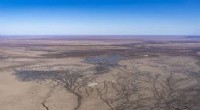
The climate of the Anza-Borrego Desert in Southern California, for example, averages 6.18 inches of rain per year and a monthly mean temperature of 72 degrees Fahrenheit. During the summer months, the monthly mean temperature has no meaning when the thermometer records temperatures at 120 degrees Fahrenheit in the shade. This is the difference between looking at climate and weather. It might also surprise you to learn that July, August and September represent the monsoon season in this San Diego County desert. Flash floods temporarily wash across the desert landscape in a brown muddy flow and in just a few days, the annual precipitation amounts are met.