By Kevin Lee | Updated Aug 30, 2022
Ancient architects were pioneers of mathematics. Their mastery of geometry and trigonometric functions—sine, cosine, tangent—enabled the construction of enduring marvels such as the Egyptian pyramids. Today, architects and surveyors alike continue to rely on these same principles to evaluate terrain, determine boundaries, and design safe, efficient structures.
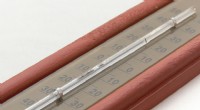
One of the most frequent applications of trigonometry in architecture is height determination. By measuring the angle to a building’s apex with a clinometer and knowing the horizontal distance, architects can calculate the vertical height using the tangent function. Modern digital clinometers enhance accuracy, while traditional instruments still serve as reliable backups.
Beyond aesthetics, architects must quantify the forces acting on a structure. Vectors—defined by magnitude and direction—represent loads such as gravity, wind, and seismic activity. Trigonometric identities allow architects to decompose these vectors into horizontal and vertical components, facilitating precise load calculations.
Trusses are lightweight frameworks that efficiently transfer loads to supports. Calculating the internal forces in each member requires an understanding of the geometry of the truss. By applying sine and cosine to the angles formed by diagonal members, engineers can resolve the forces at every node, ensuring the structure can withstand applied loads.
Modern skylines showcase buildings that blend form and function. Architects now employ calculus, advanced geometry, and sophisticated CAD software to model and analyze projects before construction. These tools enable iterative design, allowing architects to optimize performance, comply with regulations, and push creative boundaries.
In sum, trigonometry remains a foundational tool—linking ancient ingenuity with cutting‑edge technology—to achieve safe, beautiful, and functional architecture.