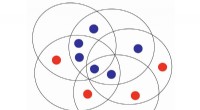
One important factor in the spread of innovation is the network of relationships between people in the community. The more connected a community is, the more likely it is that new ideas and technologies will spread quickly. This is because people are more likely to learn about new things from people they know and trust.
Another important factor is the level of diversity in the community. A community that is more diverse is more likely to be innovative because it has a greater variety of ideas and perspectives. When people from different backgrounds come together, they are more likely to generate new and creative solutions to problems.
Finally, the level of trust in the community is also important. If people trust each other, they are more likely to be willing to share new ideas and take risks. This creates an environment that is more conducive to innovation.
By understanding these factors, mathematical models can provide some insights into how innovation takes hold in a community. This information can be used to design policies and interventions that can help to promote innovation in specific communities.
Here are some specific examples of how mathematical modeling has been used to study the spread of innovation:
* In 2010, a team of researchers at the Massachusetts Institute of Technology (MIT) developed a mathematical model to study the spread of solar power adoption in the United States. The model found that the adoption of solar power was influenced by a number of factors, including the price of solar panels, the availability of government incentives, and the level of awareness of solar power in the community.
* In 2012, a team of researchers at the University of California, Berkeley developed a mathematical model to study the spread of electric vehicles in the United States. The model found that the adoption of electric vehicles was influenced by a number of factors, including the price of electric vehicles, the availability of charging infrastructure, and the level of awareness of electric vehicles in the community.
* In 2014, a team of researchers at the University of Cambridge developed a mathematical model to study the spread of mobile banking in Kenya. The model found that the adoption of mobile banking was influenced by a number of factors, including the availability of mobile phones, the level of literacy in the community, and the level of trust in the mobile banking system.
These are just a few examples of how mathematical modeling has been used to study the spread of innovation. By understanding the factors that influence the spread of innovation, mathematical models can help us to design policies and interventions that can promote innovation in specific communities.