By Emma Woodhouse – Updated Aug 30, 2022
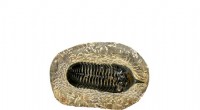
A fossil is any trace of life preserved in rock. The term, derived from Latin fossilis (“dug up”), reflects the fact that fossils are typically uncovered during excavation. While bones and teeth are the most common fossilized remains, impressions such as footprints also qualify. Reference 1
Fossil correlation is a cornerstone of stratigraphy. Geologists identify rock layers that contain a specific assemblage of fossils and, knowing the age range of those species, infer the age of the entire stratum. Because each species has a finite, relatively short geological lifespan and goes extinct permanently, the presence of the same fossil assemblage elsewhere signals that the rocks were deposited during the same time interval. Reference 2
Index fossils possess three key attributes: they are easily recognizable, their geographic distribution is broad, and their temporal range is narrow. These traits allow geologists to correlate strata across vast distances. Ammonites, for example, are renowned index fossils that lived during the Mesozoic and appear in a limited thickness of sedimentary rock worldwide. Reference 1
The reliability of fossil correlation hinges on two core assumptions: (1) an extinct species never reappears after its disappearance, and (2) no two species are morphologically indistinguishable. Decades after the principle was first articulated, extensive fossil record studies have confirmed both assumptions, reinforcing the method’s credibility. Reference 1