By Lee Morgan | Updated Aug 30, 2022
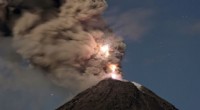
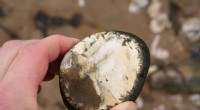
Pumice is an extrusive volcanic rock ejected during eruptions when magma foams after mixing with volatile gases and water. Rapid cooling traps air bubbles, producing a highly porous, lightweight stone that can float on water until it becomes waterlogged.
Basalt, a fine‑grained gray‑black rock rich in iron and magnesium, often serves as the parent rock for pumice. Key minerals include olivine, pyroxene, and plagioclase USGS Cascades Observatory. Basalt eruptions reach up to 1,250°C and are common in Washington, Oregon, and Idaho. Basalt makes up roughly 70% of the Earth's crust and covers most of the ocean floor.
Andesite is a light‑gray extrusive rock that often displays red or green hues. It originates from stratovolcanoes—tall, cone‑shaped volcanoes such as Mount Fuji—and erupts at 900–1,100°C. Andesite contains high silica content, plagioclase feldspar, pyroxene, hornblende, olivine, and occasionally quartz USGS Cascades Observatory. The Andes Mountains are a primary source of andesite.
Dacite, comprising about two‑thirds silica, is typically light gray and originates from regions like the Roman province of Dacia near the Danube River. Its mineral assemblage—plagioclase feldspar, quartz, biotite, and hornblende—yields pumice that can form during violent eruptions Encyclopedia Britannica. Dacite eruptions range from 800–1,000°C and are linked to historic Plinian events such as Vesuvius (79 AD) and Krakatoa (1883).
Rhyolite cools rapidly, producing a glass‑like matrix of fine crystals that resembles granite. It contains quartz, feldspar, and biotite and is usually light gray to pink or red. Rhyolitic eruptions are highly viscous, erupting at 700–850°C. When gas is present, these eruptions can violently project pumice high into the air GNS Science. The 26,000‑year‑old Lake Taupo eruption in New Zealand is the largest recorded rhyolitic event.