By Ethan Shaw | Updated Aug 30, 2022
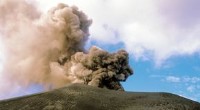
Volcanoes are more than dramatic spectacles; they are powerful agents of land‑form creation. When molten rock (magma) erupts, it can reshape continents, build new islands, and enrich soils.
Each volcano is a distinct landform. Composite or stratovolcanoes, with their steep, conical shapes, result from layers of lava, ash, and pyroclastic material deposited during successive eruptions. In contrast, shield volcanoes—such as Hawaii’s Mauna Loa and Mauna Kea—feature gentle slopes formed by fluid basaltic lava flows. Smaller features include cinder cones and lava domes. When erosion strips away the outer layers of an extinct volcano, only robust structures like volcanic necks (plugs) and dikes remain. A celebrated example is Shiprock in New Mexico. In marine settings, volcanic seamounts and island arcs signal active tectonic boundaries.
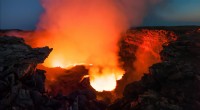
A crater is the vent opening that delivers magma to the surface. Calderas are much larger collapse structures that form when an entire volcanic chamber is destroyed—often after an explosive eruption or the evacuation of a magma chamber. Calderas can exceed 16 km (10 mi) in diameter; Oregon’s Crater Lake is a prime example, formed by the collapse of Mount Mazama roughly 7,700 years ago. New volcanic cones frequently grow within calderas, proving that the volcanic system remains active even after the initial collapse.
Volcanic activity can shape landscapes far from the vent. Fissure eruptions of basaltic lava—known as “flood basalts”—create vast plateaus, such as the Columbia Plateau, Deccan Traps, and Siberian Traps, covering thousands of square kilometres. Lava flows often follow river valleys; if surrounding rock erodes, the remaining flow may become an “inverted valley” ridge.
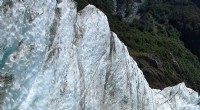
Volcanoes do not sculpt the earth in isolation. Glaciers, rivers, and tectonic forces interact to produce unique features. For example, Mount Jefferson in the Oregon Cascades still bears glaciers that carve its summit, while eruptions beneath ice caps in Iceland or Antarctica create “tuyas”—flat‑topped mesas formed when lava meets ice. Rivers cut canyons into volcanic slopes, and many volcanoes display radial drainage patterns, with streams radiating from the central summit.
By understanding these processes, scientists can assess hazards, predict future growth, and appreciate the remarkable role volcanoes play in shaping our planet.