John W. Banagan/Getty Images
The Earth's crust is a vault of vital materials that fuel modern industry—from the steel that builds our cities to the lithium that powers our electric vehicles and the gold that adorns our jewelry. Identifying the biggest reserves of these resources—and who controls them—has historically reshaped economies, sparked conflicts, and directed global trade flows.
Pinpointing a deposit’s true size is inherently challenging. Geologists rely on indirect methods—measuring gravitational and magnetic fields, sending seismic waves, and injecting electrical currents—to infer the presence of ore beneath the surface. While these techniques offer valuable clues, they can never provide a perfect measurement, which is why reported figures are estimates rather than absolutes.
Technological advances continually refine our understanding of these deposits, and new discoveries may soon top current records. Below is a snapshot of the largest known reserves for five essential materials, each with a unique geological story and significant economic implications.
BJP7images/Shutterstock
Western Australia’s Pilbara Craton hosts the world’s most extensive iron‑ore deposit. This ancient geological formation, dating back up to 3.6 billion years to the Archean Eon, has remained tectonically stable for eons, preserving vast iron reserves. Estimates suggest around 55 billion tons of iron ore, potentially valued at $5.775 trillion. The deposit’s formation is linked to the breakup of the supercontinent Columbia (Nuna) between 1.7 and 1.45 billion years ago, when tectonic forces forced iron‑rich magmatic fluids to the surface. Today, Western Australia supplies 98 % of Australia’s iron production, underpinning the global steel industry that fueled the Industrial Revolution.
Rhj/Getty Images
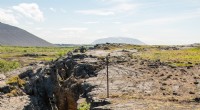
The McDermitt Caldera straddles Oregon and Nevada, covering a 616‑square‑mile clay bed that may contain 20–40 million metric tons of lithium. Remarkably, this deposit boasts a lithium concentration of up to 2.4 % by weight—more than double the average for claystone deposits. The caldera, a collapsed volcanic vent formed about 16 million years ago, is part of the Yellowstone hotspot chain. Its lithium-rich magma created the extensive deposit that underpins today’s surge in electric‑vehicle battery production. Forecasts predict lithium’s value to more than double over the next decade, positioning McDermitt as a key player in the transition to clean energy.
RHJPhtotos/Shutterstock
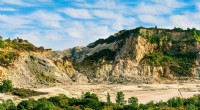
South Africa’s Bushveld Igneous Complex, spanning 26,000 square miles, contains over 70 % of the world’s platinum and roughly 50 % of its palladium. This immense igneous intrusion, the largest on Earth, formed from layered magma that cooled and crystallized to concentrate precious metals. Platinum’s versatility—used in jewelry, electronics, and catalysis—means about half of global supply serves automotive catalytic converters. The complex’s dual leadership in platinum and palladium solidifies South Africa’s dominance in the precious‑metal market.
Anton Petrus/Getty Images
Saudi Arabia’s Ghawar Oil Field, covering roughly 1,700 square miles, is the world’s largest single oil field. Since its 1948 discovery, it has produced more than half of the country’s oil output. Although reserves have waned, Ghawar still supplies about a third of Saudi Arabia’s current reserves and continues to generate roughly 3.8 million barrels per day—down from its 1981 peak of 5.7 million barrels. Geologically, the field owes its abundance to an ancient marine ecosystem that fossilized into oil and was later uplifted by tectonic forces. Ghawar remains a cornerstone of Saudi Arabia’s economy, where oil accounts for over 90 % of national revenue.
Phawat/Shutterstock
While the Witwatersrand Basin in South Africa has long been regarded as the richest gold source, a recent discovery in China’s Hunan Province may upend that narrative. The Wangu Goldfield, identified via 3D geological modeling, contains gold veins extending up to 9,800 feet deep and is estimated to hold 1,100 tons of gold—about 100 tons more than South Deep’s reserves. Valued at $83 billion, the deposit could dramatically reduce China’s reliance on imported gold and position it as a major exporter. China’s current status as the world’s leading gold producer and importer underscores the strategic importance of this find.