Andrii Duhin/Shutterstock
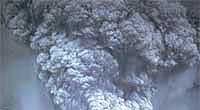
Volcanic eruptions can wreak havoc on both human and natural life. The 1980 eruption of Mount St. Helens remains the deadliest and most destructive volcanic event in U.S. history, incinerating miles of surrounding land with lava and ash. Facing this devastation, scientists from the University of California, Riverside and Utah State University turned to an unlikely ally: the gopher.
Gophers are burrowers that spend most of their lives underground, emerging only to forage or disperse vegetation. The researchers hypothesized that their tunneling and seed‑dispersion could accelerate ecological recovery. In 1983, they placed a handful of northern pocket gophers (Thomomys talpoides) on two plots of the porous pumice that had survived the eruption, where the hardy lupin Lupinus lepidus had persisted. The gophers were confined for just 24 hours.
The experiment paid off. Six years later, the same plots supported 40,000 thriving lupin plants, thanks to the gophers’ disturbance of the soil, which released buried communities of bacteria and fungi. UC Riverside microbiologist Michael Allen remarked that the “residual effect” of a single day’s disturbance was still evident four decades later.
yhelfman/Shutterstock
A 2024 study published in Frontiers in Microbiomes detailed how bacteria and fungi, particularly arbuscular mycorrhizal fungi (AMF), have been pivotal to the volcano’s ecological rebound. AMF concentrations were markedly higher in gopher‑touched plots than in barren ones. Allen explains that plant roots rely on these fungi to transport nutrients and water, while the fungi receive carbon from the plants in exchange. This mutualism has also been observed beneath some of the world’s oldest trees in Chile, where AMF helped alerce forests flourish.
The gopher plots were not the only sites where life returned. In an old‑growth forest on one side of the volcano, AMF were found deep in the soil beneath tree roots. They extracted nutrients from ash‑covered needles, redistributing them to the trees, allowing rapid regrowth. UC Riverside environmental microbiologist Emma Aronson noted that “the trees came back almost immediately in some places.”
Conversely, on the other side of the volcano where the forest had been cleared before the eruption, the absence of needles left AMF starved, hindering regeneration. Aronson described the stark contrast as “shocking.” These findings underscore the complex interdependence of organisms in ecosystem recovery. University of Connecticut mycologist Mia Maltz added, “We cannot ignore the interdependence of all things in nature, especially the unseen microbes and fungi.”