Geology:
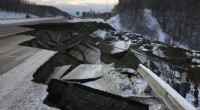
* Plate Tectonics: This theory explains the movement of Earth's lithosphere, the outermost layer, and its impact on geological formations, earthquakes, and volcanic activity.
* Rock Cycle: This theory describes the continuous transformation of rocks between igneous, sedimentary, and metamorphic forms due to geological processes.
* Evolution of Earth: This theory explains the gradual changes in Earth's atmosphere, oceans, and landforms over billions of years.
Biology:
* Cell Theory: This theory states that all living organisms are composed of cells, the basic unit of life.
* Theory of Evolution by Natural Selection: This theory proposes that organisms change over time through a process of natural selection, where individuals with advantageous traits are more likely to survive and reproduce.
* Gene Theory: This theory explains the inheritance of traits through genes, which are units of heredity.
Similarities between geological and biological theories:
* Based on empirical evidence: Both geological and biological theories are grounded in observations and experiments.
* Testable and falsifiable: Scientific theories must be testable and potentially falsifiable. New evidence can modify or even replace existing theories.
* Explanatory power: Theories provide explanations for natural phenomena and help us understand the world around us.
Differences between geological and biological theories:
* Time scales: Geological processes occur over millions or billions of years, while biological processes can happen over much shorter timeframes.
* Scope: Geology focuses on the Earth's structure and processes, while biology focuses on living organisms and their interactions.
In conclusion, theories are essential in both geology and biology, providing frameworks for understanding the natural world. They are constantly refined and tested as new evidence emerges.