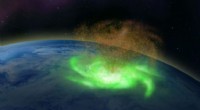
Geology:
* Focus: The study of the Earth, its composition, structure, processes, and history.
* Scope: Includes topics like:
* Rocks and minerals: Formation, classification, properties, and uses.
* Earth's structure: Crust, mantle, core, and their interactions.
* Plate tectonics: Movement of Earth's plates and their consequences (earthquakes, volcanoes).
* Geological processes: Weathering, erosion, sedimentation, and the rock cycle.
* Fossil record: Studying past life and the history of the Earth.
* Natural resources: Exploration and extraction of minerals, fossil fuels, and groundwater.
* Methodology: Field observations, lab analysis, computer modeling, and geophysical techniques.
Biology:
* Focus: The study of life and living organisms, including their structure, function, growth, evolution, and interactions with the environment.
* Scope: Includes topics like:
* Cells: The fundamental unit of life and their structure.
* Genetics: Heredity, DNA, and the mechanisms of inheritance.
* Evolution: How life has changed over time through natural selection.
* Biodiversity: The variety of life on Earth and its ecosystems.
* Ecology: The study of how organisms interact with each other and their environment.
* Physiology: The study of how living organisms function.
* Methodology: Experiments, observations, molecular analysis, and bioinformatics.
Interconnections between Geology and Biology:
* Fossil record: Provides evidence for the evolution of life and the history of Earth's environments.
* Geological processes: Shape ecosystems and influence biodiversity.
* Climate change: Geological processes influence climate patterns and affect the distribution of species.
* Mineral resources: Essential for life, influencing evolution and ecosystem function.
* Biogeology: A field that integrates geological and biological perspectives to understand the interaction between the Earth and life.
In summary:
* Geology focuses on the non-living components of the Earth, while biology focuses on living organisms.
* Geology studies the history and structure of the Earth, while biology explores the processes of life.
* Both disciplines are essential for understanding the Earth's interconnected systems and the evolution of life.