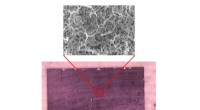
1. Magnetic Minerals:
* Iron-bearing minerals: Minerals like magnetite (Fe3O4) and hematite (Fe2O3) are strongly magnetic. When these minerals crystallize in the presence of a magnetic field, their tiny crystals align themselves with the field's direction. This alignment is known as magnetic remanence.
* Non-magnetic minerals: Minerals like quartz and feldspar are not magnetic. They are not affected by the magnetic field during cooling.
2. Paleomagnetism:
* Recording Earth's magnetic field: Magnetic remanence in rocks provides a record of the Earth's magnetic field at the time of their formation. This is known as paleomagnetism.
* Understanding past magnetic reversals: By studying the magnetic remanence in rocks of different ages, scientists can reconstruct the history of the Earth's magnetic field, including its frequent reversals.
3. Cooling Process:
* Critical cooling temperature: The alignment of magnetic minerals is most effective during a specific temperature range, known as the blocking temperature. This temperature is unique for each mineral and represents the point below which the magnetic alignment becomes permanent.
* Rapid cooling: If the rock cools rapidly, the magnetic minerals may not have enough time to align properly, leading to a weaker magnetic remanence.
* Slow cooling: Slow cooling allows the magnetic minerals to align more effectively with the magnetic field, resulting in a stronger magnetic remanence.
4. Applications:
* Dating geological events: Paleomagnetic data can be used to date geological events like volcanic eruptions or tectonic plate movements.
* Exploring for mineral deposits: The magnetic properties of rocks can be used to locate mineral deposits containing magnetic minerals.
* Understanding climate change: Paleomagnetic data can be used to reconstruct past climate patterns and to understand how the Earth's climate has changed over time.
In summary:
The presence of a magnetic field during the cooling of rocks can cause magnetic minerals within the rocks to align themselves with the field, creating a magnetic remanence. This remanence provides valuable information about the Earth's past magnetic field and can be used for various scientific purposes, including geological dating, mineral exploration, and climate change research.