Here's a breakdown:
How Metamorphic Rocks Form:
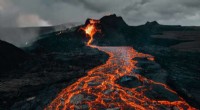
* Heat: Intense heat, often from nearby magma or the Earth's interior, causes the minerals within the rock to recrystallize.
* Pressure: The immense pressure, usually from the weight of overlying rocks, compresses the original rock and forces its minerals to rearrange.
* Fluids: Hot, chemically active fluids can also be involved, altering the mineral composition of the rock.
Types of Metamorphism:
* Contact Metamorphism: Occurs when rocks are heated by contact with magma or lava. This is usually a localized process.
* Regional Metamorphism: Occurs over large areas due to the intense pressure and heat associated with tectonic plate collisions.
Characteristics of Metamorphic Rocks:
* Foliation: Many metamorphic rocks exhibit a layered or banded appearance, called foliation. This is caused by the alignment of minerals under pressure. Examples: slate, schist, gneiss.
* Non-foliated: Some metamorphic rocks lack a distinct foliation due to the even distribution of minerals. Examples: marble, quartzite.
Examples of Metamorphic Rocks:
* Marble: Formed from limestone.
* Slate: Formed from shale.
* Gneiss: A high-grade metamorphic rock with a banded appearance.
* Quartzite: Formed from sandstone.
* Schist: A metamorphic rock with a distinct foliation.
Metamorphic Rocks in Our World:
Metamorphic rocks are found in many parts of the Earth's crust. They play important roles in:
* Building materials: Marble is used in sculptures and buildings. Slate is used for roofing tiles and flooring.
* Geologic history: Metamorphic rocks provide clues about the geological history of a region.
* Mineral resources: Metamorphic rocks are often associated with valuable mineral deposits.
I hope this explanation helps! Let me know if you have any other questions.