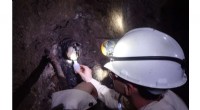
Rocks Most Likely to Contain Fossils:
* Sedimentary Rocks: These are formed from the accumulation and cementation of sediments like sand, mud, and organic debris.
* Examples: Sandstone, limestone, shale.
* Why? Fossils are most commonly found in sedimentary rocks because:
* Burial and Preservation: Sedimentary rock formation involves burying organisms under layers of sediment, which helps preserve them.
* Favorable Conditions: Many sedimentary environments (like ancient lakes, oceans, and swamps) were ideal for life.
Rocks Less Likely to Contain Fossils:
* Igneous Rocks: These form from the cooling and solidification of molten rock (magma or lava).
* Examples: Granite, basalt.
* Why? The intense heat and pressure involved in their formation would destroy any existing fossils.
* Metamorphic Rocks: These form when existing rocks are transformed by heat, pressure, or chemical reactions.
* Examples: Marble, slate, gneiss.
* Why? While some fossils can survive metamorphosis, the extreme conditions often distort or destroy them.
Important Notes:
* Fossil Types: The type of fossil found often depends on the type of sedimentary rock. For example, limestone often contains marine fossils (like shells and corals).
* Fossil Abundance: The abundance of fossils in a rock can vary greatly. Some rocks are rich in fossils, while others may only contain a few fragments.
* Geological History: The age of a rock and its geological history play a crucial role in determining whether it will contain fossils.
In short, sedimentary rocks are the champions of fossil hunting!