Here's why:
* Formation: Granite forms deep within the Earth's crust from slowly cooling magma. This slow cooling allows the minerals to crystallize into large, interlocking grains, creating a dense and solid rock.
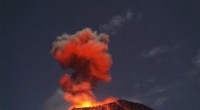
* Volcanic Origin: Pumice and scoria are both volcanic rocks. They form when lava erupts and rapidly cools, trapping gas bubbles within the solidifying rock. The presence of these gas bubbles creates the characteristic porous texture of these rocks.
* Granite's Crystalline Structure: The mineral composition of granite is different from that of pumice and scoria. Granite is primarily composed of quartz, feldspar, and mica, which form a tight, interlocked structure.
Key Differences:
* Density: Granite is much denser than pumice and scoria.
* Texture: Granite has a coarse-grained, crystalline texture, while pumice and scoria have a glassy, frothy texture.
* Formation: Granite forms from cooling magma, while pumice and scoria form from cooling lava.
However, there are some exceptions:
* Vesicular Granite: In rare cases, granite can contain small vesicles (gas bubbles), usually caused by the presence of gases within the magma before crystallization.
* Granite with Weathering: Over long periods, granite can weather and develop pores, but these pores are generally not as large or numerous as those in pumice and scoria.
Therefore, while granite might have some minor air holes, it is not characteristic of the rock type like it is in pumice and scoria.