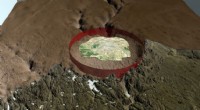
* High heat flow: Volcanic activity and tectonic plate movement bring heat from the Earth's mantle closer to the surface.
* Permeable rock formations: These formations allow water to circulate and be heated by the hot rocks below.
* Water sources: Geothermal resources require a source of water to be heated. This can be groundwater, surface water, or even seawater.
Here are some specific locations where geothermal resources are commonly found:
* Volcanic arcs: These are chains of volcanoes formed at convergent plate boundaries where one plate subducts (slides) beneath another. Examples include the Pacific Ring of Fire, the Andes Mountains, and the Aleutian Islands.
* Mid-ocean ridges: These are underwater mountain ranges formed at divergent plate boundaries where new oceanic crust is created.
* Hot spots: These are areas of volcanic activity that are not associated with plate boundaries. Examples include Hawaii and Yellowstone National Park.
Other factors that influence geothermal resource availability include:
* Depth to the geothermal reservoir: The deeper the reservoir, the higher the temperature.
* Rock permeability: The more permeable the rock, the easier it is for water to circulate and be heated.
* Water chemistry: The chemistry of the water can affect the efficiency of geothermal power plants.
In conclusion, while geothermal resources can be found in various locations, the most abundant and commercially viable resources are typically located in areas with high heat flow, permeable rock formations, and access to water.