* High Pressure and Temperature: The mantle experiences immense pressure and extreme temperatures, which cause the rocks to behave differently than they would at the surface.
* Convection Currents: The mantle exhibits convection currents, where hotter, less dense material rises and cooler, denser material sinks. This movement, which drives plate tectonics, is only possible if the mantle has the ability to flow, albeit very slowly.
* Seismic Wave Behavior: Seismic waves, generated by earthquakes, travel differently through different materials. The way seismic waves move through the mantle indicates that it is not completely solid but can deform and flow over time.
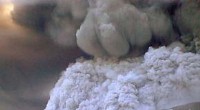
* Volcanic Eruptions: The movement of magma, molten rock, from the mantle to the surface during volcanic eruptions suggests that the mantle can be melted, indicating a fluid-like behavior.
Here's how to understand the "semi-solid" concept:
* Think of a glacier: Glaciers, while solid, can slowly flow over time. Similarly, the mantle behaves as a solid over short timescales but can deform and flow over millions of years.
* Viscosity: Imagine honey or molasses. They flow, but very slowly. The mantle has a very high viscosity, meaning it resists flow, but over geological time it can behave like a very viscous fluid.
In summary: While the mantle appears solid on a human timescale, the high pressure, temperature, and evidence from seismic waves and volcanic activity all suggest it is a semi-solid that can flow and deform over long periods. This flow is what powers plate tectonics and shapes the Earth's surface.