Slow Cooling:
* Large Crystals (Phaneritic Texture): When magma cools slowly, the mineral crystals have ample time to grow large and well-defined. This results in a phaneritic texture, where the crystals are visible to the naked eye. Examples include granite and gabbro.
* Coarse-Grained: Slow cooling typically produces rocks with larger crystals, hence they are classified as coarse-grained.
Fast Cooling:
* Small Crystals (Aphanitic Texture): If the magma cools rapidly, the crystals have limited time to grow. This results in an aphanitic texture, where the crystals are too small to be seen without a microscope. Examples include rhyolite and basalt.
* Fine-Grained: Fast cooling results in smaller crystals, leading to fine-grained rocks.
Very Fast Cooling:
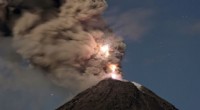
* No Crystals (Glassy Texture): When magma cools extremely quickly (like in volcanic eruptions), the minerals don't have time to crystallize at all. This results in a glassy texture, where the rock is essentially solid glass. Examples include obsidian and pumice.
Intermediate Cooling:
* Mixed Crystal Sizes (Porphyritic Texture): Some rocks exhibit a porphyritic texture, where larger crystals (phenocrysts) are embedded in a finer-grained matrix. This indicates a two-stage cooling process: initial slow cooling that allows large crystals to form, followed by rapid cooling that solidifies the remaining magma quickly.
Other Factors Influencing Texture:
* Amount of Dissolved Gases: The presence of dissolved gases in magma can also influence texture. These gases can create holes (vesicles) in the rock, giving it a vesicular texture.
* Viscosity: The viscosity (resistance to flow) of magma also impacts crystallization. More viscous magmas tend to cool more slowly, allowing larger crystals to form.
In Summary:
The rate of cooling is a major factor determining the texture of an igneous rock. Slow cooling produces large crystals, while fast cooling results in small or no crystals. The resulting texture is a key identifier for igneous rocks and provides clues about the rock's formation history.