1. Subduction:
- The denser oceanic plate slides beneath a less dense continental plate or another oceanic plate.
- As the oceanic plate descends, it experiences increasing pressure and temperature.
2. Melting and Magma Generation:
- The subducting plate releases water and other fluids into the mantle wedge, the region between the subducting and overriding plates.
- These fluids lower the melting point of the surrounding mantle rocks, causing them to melt and form magma.
3. Magma Ascent and Eruption:
- The buoyant magma rises through the overlying plate, often creating a chain of volcanoes parallel to the trench where subduction occurs.
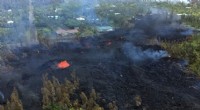
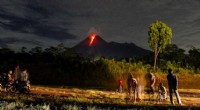
- As the magma reaches the surface, it erupts, forming volcanic mountains.
4. Formation of Aleutian-type Mountains:
- Over time, the accumulation of volcanic eruptions and associated volcaniclastic deposits (fragments of volcanic rock) leads to the formation of a chain of mountains.
- These mountains are typically characterized by:
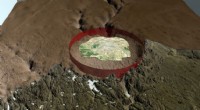
- Volcanic peaks: Cones, shields, and stratovolcanoes.
- Intercalated sedimentary rocks: Derived from volcanic activity and erosion.
- Steep slopes and rugged terrain: Due to the volcanic origins and erosion.
The Aleutian Islands are a prime example of an Aleutian-type mountain range. They are formed by the subduction of the Pacific Plate beneath the North American Plate, creating a chain of volcanic islands stretching over 1,500 miles.
Other examples of Aleutian-type mountains include:
- The Andes Mountains in South America
- The Cascade Range in North America
- The Japanese Islands
- The Philippines
In essence, Aleutian-type mountains are a direct result of the interplay between plate tectonics, volcanism, and erosion, forming distinctive mountain ranges with a strong volcanic signature.