1. Lack of Characteristic Rock Types:
* Absence of Ophiolites: Subduction zones often expose pieces of oceanic crust called ophiolites. These are made of specific rock types like peridotite, gabbro, and basalt, which are absent in non-subduction mountain ranges.
* Lack of Accretionary Prisms: Subduction zones create accretionary prisms, accumulations of sediment scraped off the subducting plate. These are often characterized by chaotic, deformed sedimentary rocks.
* Limited Presence of Plutons: Subduction zones often lead to the formation of large intrusions of igneous rock (plutons). While plutons can form in other tectonic settings, their presence in significant numbers is a strong indicator of subduction.
2. Structural Features:
* Absence of Thrust Faults: Subduction zones generate significant thrust faulting, where rocks are pushed over each other. If a mountain range lacks significant thrust faulting, subduction is less likely.
* Lack of Folding: Subduction-related mountain ranges often exhibit intense folding of rocks. A mountain range with minimal folding suggests different tectonic processes.
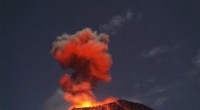
* Absence of Volcanic Arcs: Subduction zones typically produce chains of volcanoes (volcanic arcs) on the overriding plate. If there are no volcanoes associated with the mountain range, subduction is less probable.
3. Geochemistry and Isotopes:
* Uncharacteristic Elemental Signatures: Subduction zones have distinct geochemical signatures, often showing enrichment in certain elements like potassium, rubidium, and strontium. A lack of these signatures suggests non-subduction origins.
* Isotopic Ratios: Rocks formed in subduction zones have specific isotopic ratios, often reflecting the interaction of different crustal and mantle materials. If the isotopic signatures don't match those of subduction zones, other processes are likely involved.
4. Regional Tectonic Setting:
* Absence of a Convergent Plate Boundary: Subduction zones are formed at convergent plate boundaries. If the mountain range is not located in a region where plates are colliding, subduction is unlikely.
* Presence of Other Tectonic Features: Mountain ranges can form due to other tectonic processes, such as continental collisions, rifting, or uplift along faults. If other features related to these processes are present, subduction is less likely.
Important Note: Determining the origin of a mountain range requires detailed geological analysis. The presence or absence of certain features is not always definitive. It's essential to consider multiple factors and evaluate the geological context comprehensively.