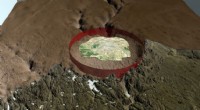
* Crust: The Earth's crust is the outermost layer, composed primarily of lighter elements like silicon, oxygen, aluminum, and iron. Its density ranges from 2.7 to 3.0 g/cm³.
* Mantle: The mantle lies beneath the crust and is composed mainly of silicate minerals like olivine and pyroxene. It has a density of roughly 3.3 to 5.5 g/cm³, increasing with depth due to the increasing pressure.
* Outer Core: The outer core is a liquid layer primarily composed of iron and nickel with trace amounts of other elements. The density of the outer core is approximately 9.9 to 12.2 g/cm³.
* Inner Core: The innermost layer, the inner core, is solid despite the intense heat because of the immense pressure. It's mainly composed of iron and nickel with a density of around 12.6 to 13.0 g/cm³.
The reasons for this increase in density are:
* Compression: The deeper you go into the Earth, the more pressure you experience from the weight of the overlying layers. This pressure compresses the materials, making them denser.
* Composition: The core is composed of heavier elements like iron and nickel, which are denser than the lighter elements found in the crust and mantle.
* Phase changes: Some materials, like the minerals in the mantle, undergo phase changes under high pressure, transitioning to denser forms.
Therefore, as you travel from the Earth's outer layer to its core, you encounter a significant increase in density due to the combined effects of pressure, composition, and phase transitions.