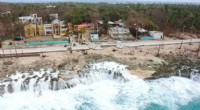
* Water enters joints: Water flows into the cracks and crevices in the rock, often due to the force of waves crashing against the cliff face or river currents.
* Pressure builds: As the water enters, it creates pressure within the joint. This pressure can be significant, especially during powerful waves or rapid currents.
* Force expands the joint: The pressure from the water forces the joint open, widening the crack. This happens because the water is essentially trying to find a larger space.
* Repeated action: Over time, this repeated action of water entering and expanding the joint weakens the rock. Eventually, the joint may become large enough that the rock breaks apart.
Why joints are important: Joints are natural weaknesses in the rock, created by various geological processes. They provide the entry points for water, allowing the hydraulic action to take effect.
Consequences of hydraulic action:
* Erosion of cliffs and coastlines: This action is a significant factor in the erosion of cliffs and coastlines. It can lead to rockfalls, landslides, and the gradual retreat of the shoreline.
* Formation of potholes and other landforms: Hydraulic action can also carve out potholes in riverbeds and create other unique landforms.
In summary: Hydraulic action is a powerful force that exploits existing weaknesses in rocks, particularly joints. It leads to erosion and the formation of various landforms, shaping the landscape over time.